Note: While the breeds in this collection can be blue-eyed, individual pets will vary. Please consult the adoption organization for details on a specific pet.
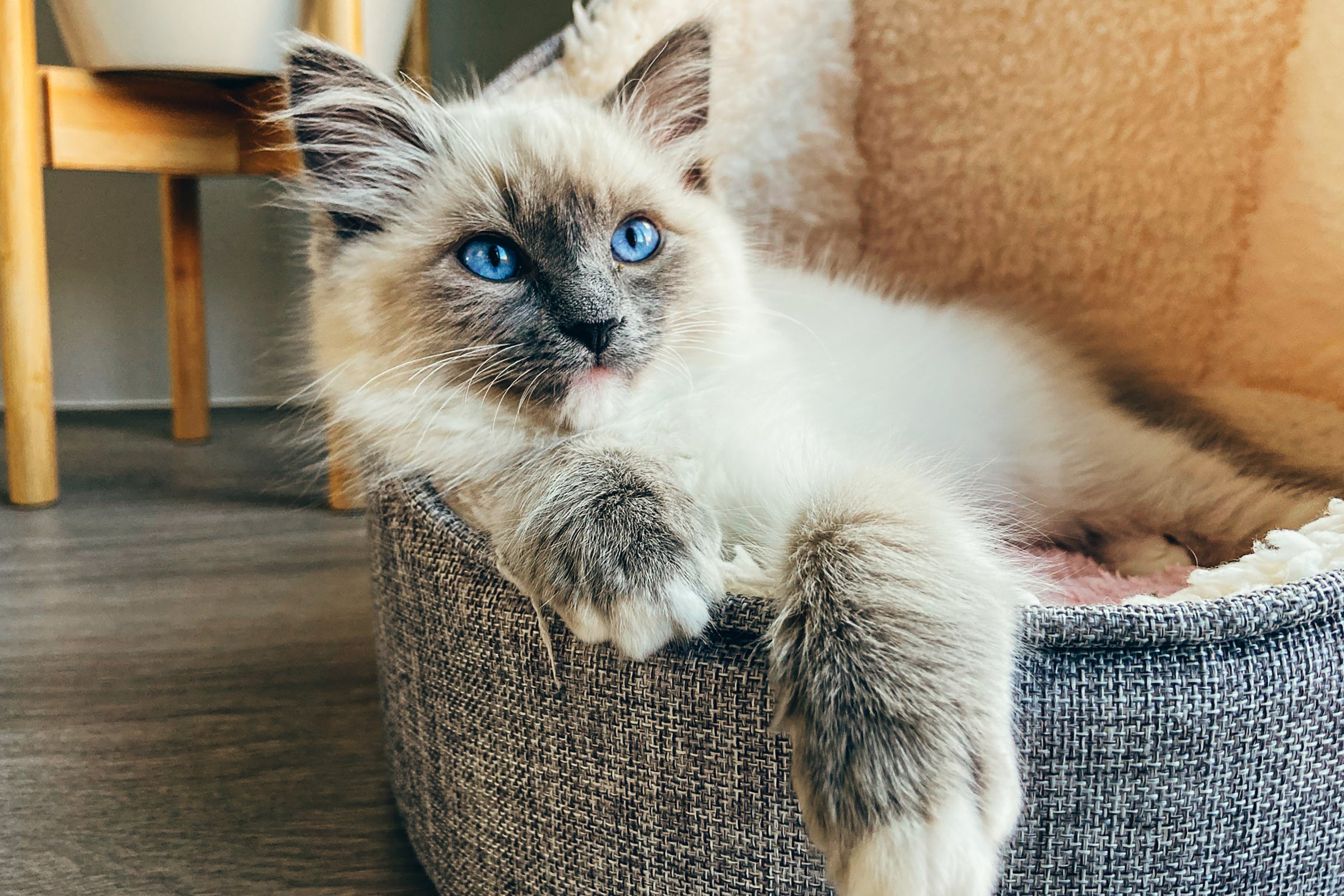
Blue-eyed cats have long fascinated cat lovers and for good reason – there’s something so captivating about sapphire-colored eyes against a fluffy coat. Blue eyes aren’t limited to one breed, but can appear in many breeds, from the soft and cuddly Ragdoll to the refined Siamese. Here, find out which cats can have blue eyes, which breeds are most likely to have blue eyes, and how to care for your ocean-eyed pal.
Can Cats Have Blue Eyes?
Blue eyes have to do with a cat’s genes, not their breed, although some breeds are more likely to have blue eyes. All cats are born with blue eyes, and a kitten’s eye pigmentation doesn’t develop until they are about six weeks old. Most cats will have this blue color change over time as they grow, but some can keep their blue eyes throughout adulthood.
The gene responsible for blue eyes is also what gives cats white fur, which is why so many white cats have blue eyes. Not all blue-eyed cats are white, and not all white cats have blue eyes, so white cats with blue eyes are special cats. Cats with pointed coats can also have blue eyes, as can black cats. The contrast of black cats with blue eyes is incredibly stunning, but it’s especially rare to find.
Blue-Eyed Cat Breeds
Bengal Cat
Bengal Cats are not a breed typically associated with blue eyes, but Bengal cats with blue eyes can occur. These cats are known for a wild-looking coat with spots or a marbled pattern, similar to their leopard ancestors. Muscular, alert, and ready to explore, these cats need a lot of mental and physical stimulation. They do best in households that are active and that have enough space for lots of climbing and vertical play.
Himalayan Cat
Also known as colorpoint Persian Cats, the Himalayan Cat combines the coat pattern of the Siamese Cat with the long hair and face of the Persian. Himalayan cats always have blue eyes, a trait from their Siamese side. Himalayan cats with blue eyes are generally quiet and low-key cats. They require lots of grooming and can be prone to some health issues their flat faces can bring, like respiratory diseases.
Turkish Angora Cat
Turkish Angora Cats can have any eye color, including blue. Turkish Angoras are known for silky, medium-length coats and a graceful build. Smart, engaging, and highly adaptable, they are highly devoted to their families. They don’t like to be bored and can show mischievous behavior, so it’s important to give them plenty of mental and physical exercise. Because of genetics, Turkish Angora cats with blue eyes could be prone to deafness, more so than non-blue-eyed ones.
Birman Cat
A Birman Cat is often called the “Sacred Cat of Burma.” They were long associated with temples and are known for their color-point coats, blue eyes, and white “gloved” paws. All Birman Cats have blue eyes. They are medium-sized and require less grooming than other long-haired breeds. Calm, sweet, and loving, they are adaptable cats that get along well with other cats and children.
Balinese Cat
The Balinese Cat looks like a Siamese Cat but with longer hair. They are born with almond-shaped and deep sapphire blue eyes that stay with them through adulthood. Fun-loving, smart, and opinionated, they love human interaction. These spotlight hogs are inquisitive and can get up to some cat antics now and then as they go on expeditions around the house. Owners should have an active and bustling household to satisfy their curiosity.
Ragdoll Cat
Ragdoll Cats are semi-longhaired large cats that always have bright blue eyes. Their name comes from their love of being held. Easygoing and happy, Ragdoll cats with blue eyes are laid-back cats, but they’ll pipe up when it’s time to eat, speaking in their soft and polite voice.
Siamese Cat
An iconic blue-eyed breed, the Siamese Cat is affectionate, smart, friendly, and sometimes vocal. Siamese cats with blue eyes are very extroverted and have never met a stranger. They love to bond with their families and will pick one family member to shadow. Confident and active, they need lots of playtime to feel satisfied, or they’ll resort to classic cat antics to quell their boredom. They require lots of attention but give love back in spades.
Persian Cat
Persian Cats are one of the most popular cat breeds in America. Laid-back and amiable, they have large, round, and wide-set eyes that are sometimes blue. Persian Cats with blue eyes have a face that is sweet and open. Sunny attitudes and less hyperactivity than other breeds make them an excellent choice for many cat lovers.
Snowshoe Cat
If you are looking for a black-and-white cat with blue eyes, the Snowshoe Cat is one to consider. Their eyes complement their pointed colors and tuxedo markings that make them look like they are wearing boots on their paws. They are a rare breed and a combination of the Siamese and American Shorthair breeds.
Tonkinese Cat
Tonkinese Cats are a cross between Siamese and Burmese cats. They are well-balanced cats, and their big eyes can be blue, green, or aqua. Smarties that love to play, these social cats love to explore their homes and chat with their owners. They need an active household with owners who can attend to their needs and won’t mind a sidekick.
Ojos Azules Cat
“Ojos Azules” means “blue eyes” in Spanish, fitting for this cat. Ojos Azules cats always have blue eyes and are an extremely hard-to-find breed. Their coats can be short or long. Because they are so rare, not much is known about them.
Personalities of Cats with Blue Eyes
Cats with blue eyes don’t have specific personalities due to their eye color or even their coat color. It’s more dependent on their breeds and their behavior. However, some of the breeds with blue eyes, such as Ragdolls and Siamese cats, have similar personality traits, such as being friendly and easy-going.
Caring for Your Blue-Eyed Cat: Health and Wellness
Caring for blue-eyed cats is the same as caring for any non-blue-eyed cats and is dependent on the individual breed. They need regular vet visits and grooming, including dental care and ear care. There are a few health conditions that owners should be aware of, especially white cats with blue eyes. These include:
- Deafness: White cats with blue eyes are at a higher risk of congenital deafness due to the genes responsible for their supermodel looks. Not all white, blue-eyed cats are deaf, and not all blue-eyed cats are deaf.
- Sun sensitivity: White cats with blue eyes might burn more easily than other cats or develop skin cancer on their ears and noses. Limit direct sun exposure and apply pet-safe sunscreen to these areas.
- Eye problems: Blue eyes don’t cause vision problems, so cats with blue eyes aren’t blind. Some breeds with blue eyes, such as Persian Cats and Himalayan Cats, can have more eye issues due to their facial structures.
Good grooming habits can contribute to a cat’s overall wellness, regardless of eye color. You should also feed your cat a healthy and balanced high-protein diet and make sure they get enough mental and physical stimulation through play sessions or even leash walking. Each breed is susceptible to different health conditions, so it’s important to have your cat go to regular vet visits.
Adopting a Cat with Blue Eyes
There are a few things to keep in mind when adopting a cat with blue eyes. Research a blue-eyed cat breed’s typical personality, activity level, and grooming requirements before narrowing it down. When adopting, ask about the specific cat’s behavior and personality, and spend time with them to get to know them. A blue-eyed cat for adoption should come with a health report, and it’s important to ask about deafness or ear issues if you are considering a white cat with blue eyes, in particular. Cats can live up to 20 years, so carefully consider your commitment to a cat, as well.
Conclusion
Blue-eyed cats are beautiful, but eye color is just one part of what makes a cat special. Whether you fall in love with a Siamese or Birman cat, the most important factor is offering a home where that particular cat can thrive.
If you’re thinking about adopting blue-eyed cat breeds for the first time, it’s important to have this information to make your decision. If you’re ready to adopt, it’s time to start thinking about the fun stuff – cat names!
For more expert tips and information on other cat breeds, explore additional cat and kitten breed group articles.


