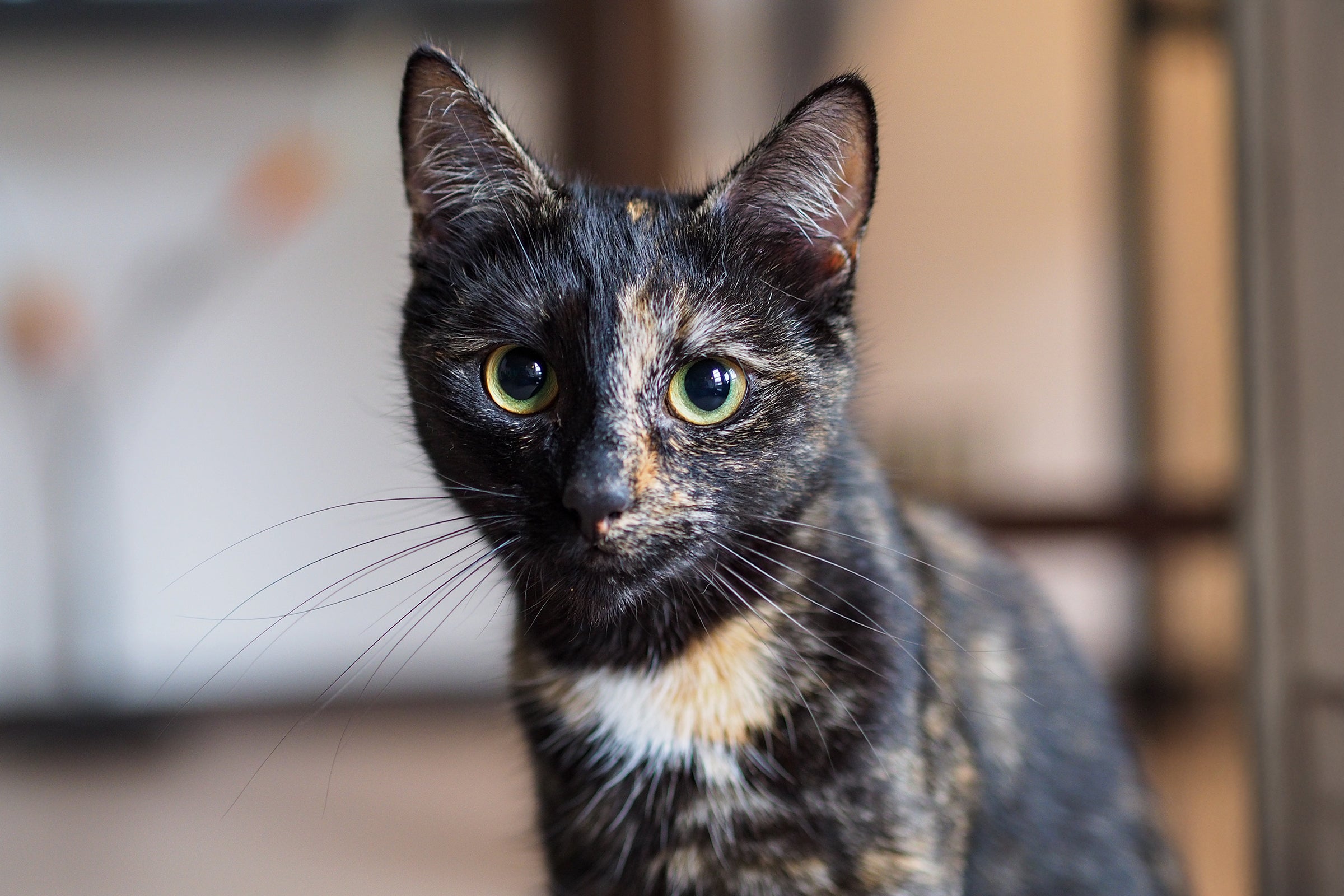
Note: While the breeds in this collection can be chimera, individual pets will vary. Please consult the adoption organization for details on a specific pet.
Cats come in all shapes, sizes, and colors, and there are some exceptional breeds. Some rare gene makeups can result in interesting-looking cats. One such cat is called a chimera cat. This two-tone face cat can sometimes have a split face, with one half one color and breed, and the other half another. Here, learn about what a chimera cat is, what causes a half-and-half cat face, and how to care for them.
What is a Chimera Cat?
Chimera cats can have faces in which each half is a different color, such as black or orange. This is the result of a rare genetic makeup called chimerism, or a mashup of two sets of kitty DNA. When a baby kitten is in utero, two separate embryos can combine, creating a cat that has one body but two different DNA types. The result is a furry, adorable hybrid pet.
The word “chimera” is derived from Greek mythology. Chimera was a fire-breathing monster that had different animals represented on its body and face, although today the term is used in the cat world to describe cats that look like they have two faces in one.
These patchwork chimera cat genetics can lead to some pretty unique-looking felines. The most famous chimeras have a perfectly split face, but chimeras can look many different ways.
Telltale Signs of a Chimera Cat
Chimera is not a breed but rather describes cats that have a unique set of genes that sometimes will result in hybrid-looking faces. Half-face cats can look and act just like any other cats. Things to look for in chimera cats might include:
- A half-and-half face.
- A subtle cat coat or fur coloring that looks like a blend of multiple cat breeds.
- Heterochromia, where a cat has two different eye colors, usually blue and green, brown, or yellow.
A two-faced cat or one that looks like a mashup of several breeds will clearly be a chimera, but many chimera cats go undetected because the markers are subtle. Unless a cat has physical signs like a half-and-half face or is genetically tested as such, it might be hard to determine if you have a chimera cat.
Not all chimera cats are orange and black. Color combinations could also be black and white or black and gray, as well as any other cat combination colors. It will depend on the cat’s breed makeup and genes, some of which won’t be visible to the naked eye.
Chimera Cat Personality and Behavior
While chimera cats have two sets of DNA, they don’t have split personalities. They can have a wide variety of personality traits depending on breed and genetic makeup, their environment, and their experiences. For example, a chimera cat with Siamese ancestry might be very social and chatty, while one with Russian Blue genes might keep more to themselves and prefer quieter homes.
Chimera Cat Health and Care
Chimera cats can live long and happy lives, and most of the time, their mixed DNA does not affect their health. However, people with chimerism can be more likely to have autoimmune issues or fertility issues. Male calico or tortoiseshell chimera cats that have the XXY chromosome might have shortened lifespans due to their genetics.
Are Tortoiseshell and Calico Cats Chimeras?
Tortoiseshell, calico, and chimera cats are not the same thing, but get mistaken for each other often. All can have multi-colored and striking coats. Tortoiseshell and calico cats get their coloring through the X chromosome – specifically X-inactivation. This simply means that the two X chromosomes in female cats are inactivated, which leads to coat patches. It could result in appearing as two “sides” like a chimera, but it might be due to different genes.
Are Chimera Cats Rare?
Not all chimera cats present with the split face, so there’s no real way to know if the gene malfunction exists without genetic testing. It’s a cat myth to say that chimera cats are rare because there are likely more cats with chimerism roaming around than we know of, and there hasn’t been much research done on them to prove it.
Finding a Chimera Cat for Adoption
Finding a chimera cat for adoption will likely be hard. Most chimera cats don’t show physical signs, and those that do are very rare. If you are looking for a cat with a unique coat, you can also consider tortoiseshell and calico cats.
Conclusion
While chimera cats are rare, there are plenty of other unique-looking cats you can adopt. If you’re thinking about adopting a chimera cat for the first time, it’s important to have this information to make your decision. If you’re ready to adopt, it’s time to start thinking about the fun stuff – cat names!
For more expert tips and information on other cat breeds, explore additional cat and kitten breed type articles.


