Note: While the breeds in this collection tend to be Egyptian, individual pets will vary. Please consult the adoption organization for details on a specific pet.
Ancient Egyptians believed cats were good luck and possessed magical powers. They were respected and revered. Many modern cat breeds have roots in Egypt. In this article, we’ll outline Egyptian cat breeds and what to expect from them, including their personalities, how to care for them, and more.
A Brief History of Egyptian Cats
Thousands of years ago, Egyptians built the pyramids, pharaohs ruled…and cats roamed. The domesticated cat’s long journey from the wilds of Africa to your living room began back in the days of the Sphinx. The history of Egyptian cat breeds includes starting as rodent hunters; they were useful to chase mice and other vermin out of food stores. As time went on and the relationship deepened, cats were worshiped, mummified, and immortalized in art as divine beings. They were grieved when they passed, with owners shaving their eyebrows as a mark of grief. There was even an ancient Egyptian goddess named Bastet, who was often depicted as a woman with a cat’s head.
Are Cats Egyptian?
Many domesticated cat breeds are descended from the original Egyptian cat, although not all are, as cats were domesticated around the world. Some have stronger connections to the ancient civilization than others, and many associate cats that look similar to ancient cats with being Egyptian.
What Did Egyptian Cats Look Like?
While we can’t know for sure what ancient Egyptian cats looked like, the well-preserved tombs offer insight. According to ancient art, they likely had pointed ears, almond-shaped eyes, slim bodies, and short fur in a mackerel tabby pattern. They could have been larger than domesticated modern cats thanks to their closer relation to wild cats.
What is an Egyptian Cat?
While many cat breeds descended from these original Egyptian rodent chasers, there are no “real” Egyptian cats. The term “Egyptian cat” refers to breeds that have closer ties to the country and the original domesticated cat, but aren’t necessarily directly related to it.
Top 7 Egyptian Cat Breeds
Several breeds have genetic links or a shared history with ancient Egyptian cats.
Sphynx Cat
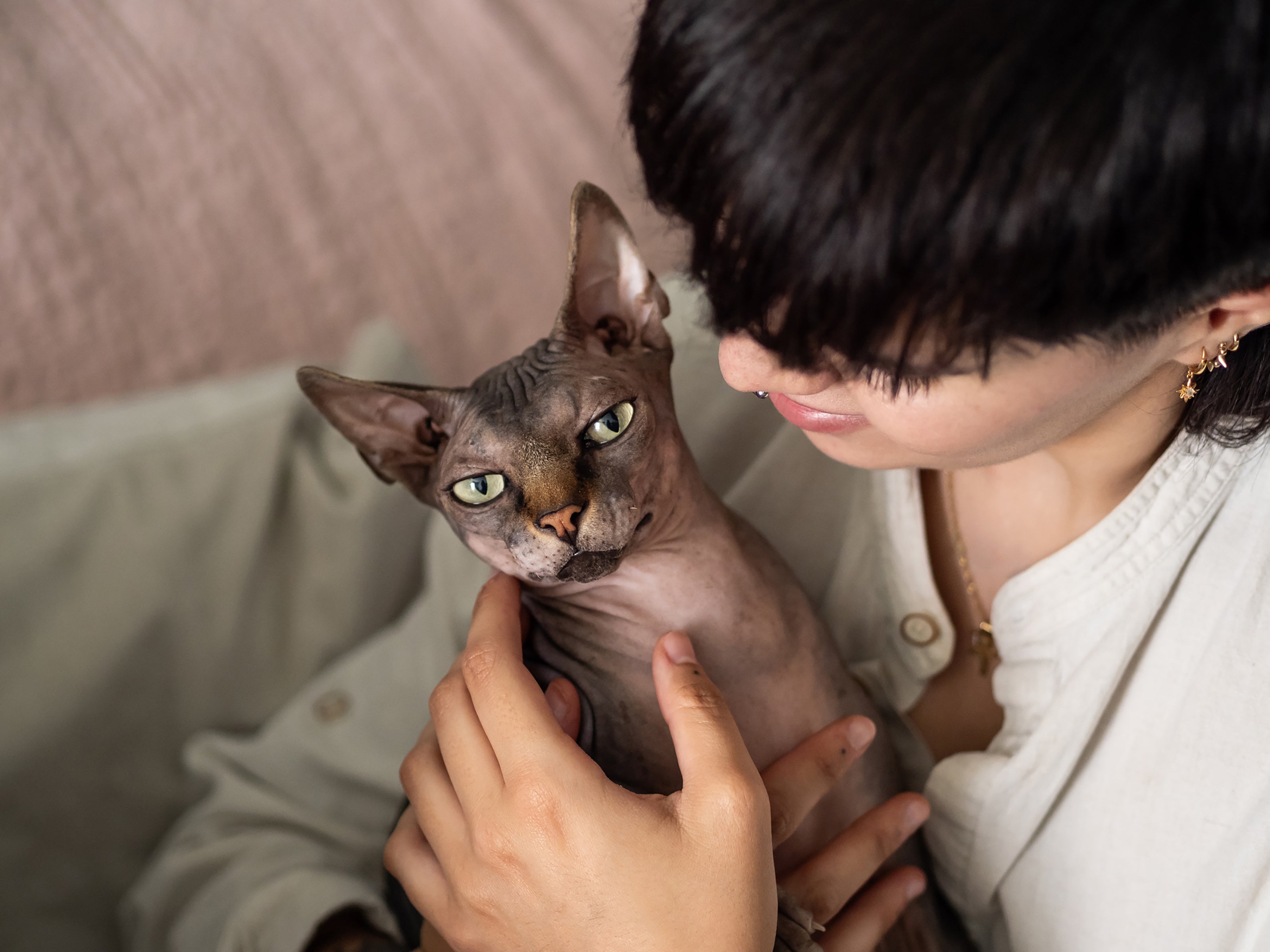
The Sphynx is a hairless cat breed that is reminiscent of the types found in ancient Egyptian art. However, they are not technically an Egyptian cat breed and were first seen in Canada in the mid-20th century. They are bright-eyed and merry cats that have a mischievous streak. These hairless Egyptian cats are very curious, often acting like busybodies who follow their owners and nosily wedge their way into situations they don’t necessarily need to be part of. Attention-seeking and somewhat mysterious at the same time, they are beloved for their charm and sense of humor. Their skin can come in various colors and patterns, and requires regular baths to keep it healthy and oil-free. Chronically cold, they’ll seek you out as a personal heating pad any chance they can get.
Savannah Cat
Tall, lean, and with charming good looks, the Savannah Cat is a cross between a domestic cat and an African Serval, a wild small cat native to Africa. They are large and have distinctive spots. They’re not technically Egyptian, but because their history can be traced back to Africa, they are often considered distant cousins of Egyptian cats.
You’ll need a second cup of coffee to keep up with the Savannah cat’s high energy levels. They crave mental stimulation and are incredibly smart, so much so that they can be trained to walk on a leash and do tricks. When they’re not seeking mental stimulation, they’re looking for physical exercise, likely doing death-defying jumps and drops in your living room. Get all the cat-proofing you can get your hands on; they can be cabinet crusaders, eager to explore.
Abyssinian Cat
The Abyssinian Cat is like a camp counselor—curious, eager to engage, and ready to adventure at any minute. They love to play and have a lot of energy that needs to be fatigued. Loyal and loving, they enjoy spending time around their owners. Some believe they hail from North Africa in either Ethiopia (formerly Abyssinia) or Egypt, although their origins aren’t exactly certain, and some genetic studies have suggested they came from Southeast Asia and places near the Indian Ocean. One of the oldest domesticated cat breeds, they do resemble ancient Egyptian cats that have been depicted in art and sculpture artifacts.
They have a ticked tabby coat pattern, are slim and tall, and have almond-shaped eyes and large ears. They love to show affection by following their owners and being involved in their lives. Enrichment and playtime are important to them as they have a ton of energy they’ll need to burn.
Egyptian Mau Cat
The Egyptian Mau is the only domesticated cat breed with naturally occurring spots in the world, with spots on their coat and skin. They have an “M” marking that looks like an ancient Egyptian scarab on their foreheads, adding to their mysterious history and allure. Developed after World War II, they look very similar to cats depicted in ancient Egyptian art, although they are genetically more similar to Western breeds. Lithe and expressive, they are elegant cats that enjoy playtime and being active. These smart felines can run up to an impressive 30 miles per hour and chirp to speak. Egyptian Mau colors include bronze, smoke, black, caramel, blue/pewter, and silver, which is the most common. Gentle, loyal, and devoted to their families, they are considered a rare cat breed, with only a few hundred Egyptian Mau kittens registered with the Governing Council of the Cat Fancy.
Chausie Cat
The Chausie Cat is very similar to the Abyssinian cat and was developed by mixing wild Southeast Asian cats with domesticated Abyssinian cats, which makes them likely related to Egyptian cats in some way. They can weigh up to a whopping 30 pounds and are considered some of the largest cats in the world. Chausie cats are extremely smart cats and need a ton of mental and physical stimulation through scratching posts, toys, and cat-specific areas such as cat runs or catios. They do well with vibrant owners who can match their seemingly unending energy levels. They do participate in quite a bit of cat antics, so you might need to extra cat-proof your home if you have a Chausie cat.
Shirazi Cat
Shirazi Cats are also known as Persian Longhaired Cats or Persian Cats. They’re not necessarily an Egyptian cat breed, but they do have connections to Egypt as they were sought-after and prized pets gifted to the aristocracy. Sweet and docile with wide-set eyes that resemble puppy dog eyes, they are the most popular cat breed in America. Their long hair means that owners will need to groom them more often than other breeds, but a cheerful attitude and eagerness offset any additional time spent grooming. They are calm and less rowdy than other cat breeds, perfect for lower-energy homes or those who enjoy peace over cat chaos. While they do love to be around their owners, are loyal, and love attention, they won’t be as in-your-face about it as some other cat breeds.
Nile Valley Egyptian Cat
The Nile Valley Egyptian Cat is a fancy way of saying Egyptian street cat or a cat indigenous to the Nile Valley area of Egypt. They are descendants of the original domesticated cat and are highly adaptable. Smart and low-maintenance, they come in a variety of colors such as solids, solid-and-white, calico, ticked tabby, and more.
Caring for an Egyptian Cat
Like all cat breeds, Egyptian-related cats need owners who will take good care of them. Proper cat care includes:
- Diet: All cats need a high-protein diet, not just Egyptian-related breeds. Some larger breeds like the Abyssinian or Savannah Cat might need more calories per serving. Ask your veterinarian for recommended serving sizes and the best diet for your cat.
- Grooming: The Egyptian cat breeds offer a wide range of coat types to choose from, from the hairless Sphynx to the Persian Longhaired Cat, also known as a Shirazi Cat. Regardless of how much they shed or the type of coat they have, all cats require ear, eye, and nail care.
- Exercise and enrichment: Perhaps related to some of their wild cat ancestry, many Egyptian cat breeds are athletic and highly active. The Chausie, for example, needs a lot of physical stimulation and owners willing to invest in cat-specific areas like catios, whereas the Shirazi is a little more peaceful and can get by with a few dedicated play sessions. The more tired a cat is, the less inclined they are to get up to mischief. Training sessions, puzzle feeders, and simple games focused on owner interaction can help tire their big brains out.
- Ideal owners: Thanks to their intelligence, a lot of Egyptian cats are curious, bordering on naughty, so you’ll want to have reserves of patience and a good sense of humor when dealing with these cats. Egyptian Maus might open your drawers, for example, or Savannah Cats might become fixated on your faucets. For the more active cat breeds, lots of interactive areas focused on vertical space can help tire them out. Cat trees, window perches, and enclosed cat spaces are all big wins. Keep in mind that some breeds, like the Savannah Cat and Chausie, are physically bigger than other breeds and might need more space.
Egyptian Cat Breeds’ Health and Lifespan
Regular healthcare will benefit any cat breed, Egyptian cat or not. Vet checkups, dental and ear and nail care, and plenty of attention are important to your cat’s overall health. Generally speaking, Egyptian cat breeds are healthy, but there could be particular health concerns. Egyptian Maus health concerns include genetic heart issues, and Sphynx health concerns include skin issues, for example. Always schedule regular vet visits to talk through any issues.
Most Egyptian cat breeds will live somewhere between 12 and 16 years of age, although some cat breeds can live up to 20 years or more with proper care. Regular healthcare, a good diet high in protein, plenty of exercise and enrichment, and lots of love can go a long way in keeping a cat healthy.
Finding an Egyptian Mau for Adoption
A lineage that dates back to ancient times, a mysteriousness, and a wide range of personalities mean that Egyptian cats have a lot to offer. Whether you like the lore of the Egyptian Mau or the wild look of the Savannah Cat, Egyptian cats for adoption have a blend of history, personality, and beauty.
If you’re thinking about adopting Egyptian cat breeds for the first time, it’s important to have this information to make your decision. If you’re ready to adopt, it’s time to start thinking about the fun stuff—cat names!
For more expert tips and information on other cat breeds, explore additional cat and kitten breed type articles.


